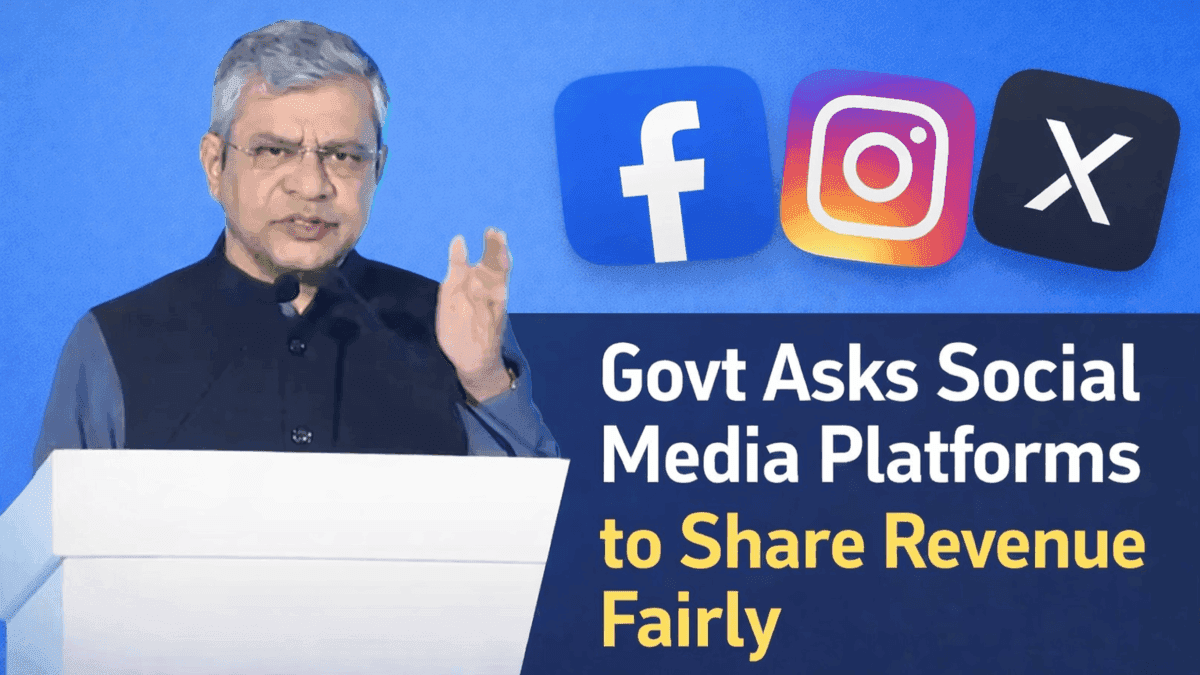
In a bold move signaling tighter scrutiny on Big Tech, Union Minister Ashwini Vaishnaw has issued an urgent call for social media platforms to overhaul their revenue sharing models. Speaking at the Digital News Publishers Association (DNPA) Conclave 2026 on February 26.
The Minister for Information and Broadcasting, Electronics, and IT emphasized that platforms must ensure equitable compensation for all content creators, from professional journalists to everyday influencers in India’s remote corners.
This directive comes as India’s creator economy explodes, with millions of tech-savvy users relying on platforms like Instagram, Facebook and X for income and engagement.
Vaishnaw’s address highlighted a pressing imbalance in the digital ecosystem. “Platforms must share revenue in a fair way with the people who are creating the content,” like YouTube. He stated, pointing out that social media giants reap billions from user-generated material while creators often receive minimal or no returns.
This includes not just news organizations and influencers but also professors, researchers, and independent voices disseminating knowledge online. The minister warned that failing to respect intellectual property could stunt India’s growth in science, technology, arts and literature, urging platforms to “rethink their revenue sharing policies” voluntarily.
For Indian tech users, this development is particularly timely. With over 800 million internet users in the country, many young professionals and entrepreneurs in cities like Pune, Bengaluru, and Mumbai are building careers as tech reviewers, app developers, and digital educators on these platforms.
However, unfair algorithms and revenue splits have long frustrated them, leading to calls for reform. Vaishnaw’s push could empower these creators by ensuring they get a slice of the ad revenue pie, potentially boosting innovation in India’s $200 billion digital economy.
The minister didn’t stop at revenue. He stressed that platforms can no longer hide behind “intermediary” status and must take full responsibility for hosted content.
This includes mandatory user consent for AI-generated or synthetic material, proactive measures against deepfakes, cyber fraud, and harmful content, and prioritizing online safety for children and citizens.
Also Read WhatsApp New Update: WhatsApp Required SIM Verification From March 1
This stance aligns with global trends, where countries like Australia have implemented news media bargaining codes forcing platforms like Meta and Google to pay publishers. In India, while no specific law mandates such sharing yet, the government hints at legal pathways if voluntary compliance falters.
Experts warn that without action, coordinated disinformation and economic inequities could erode public faith in tech.