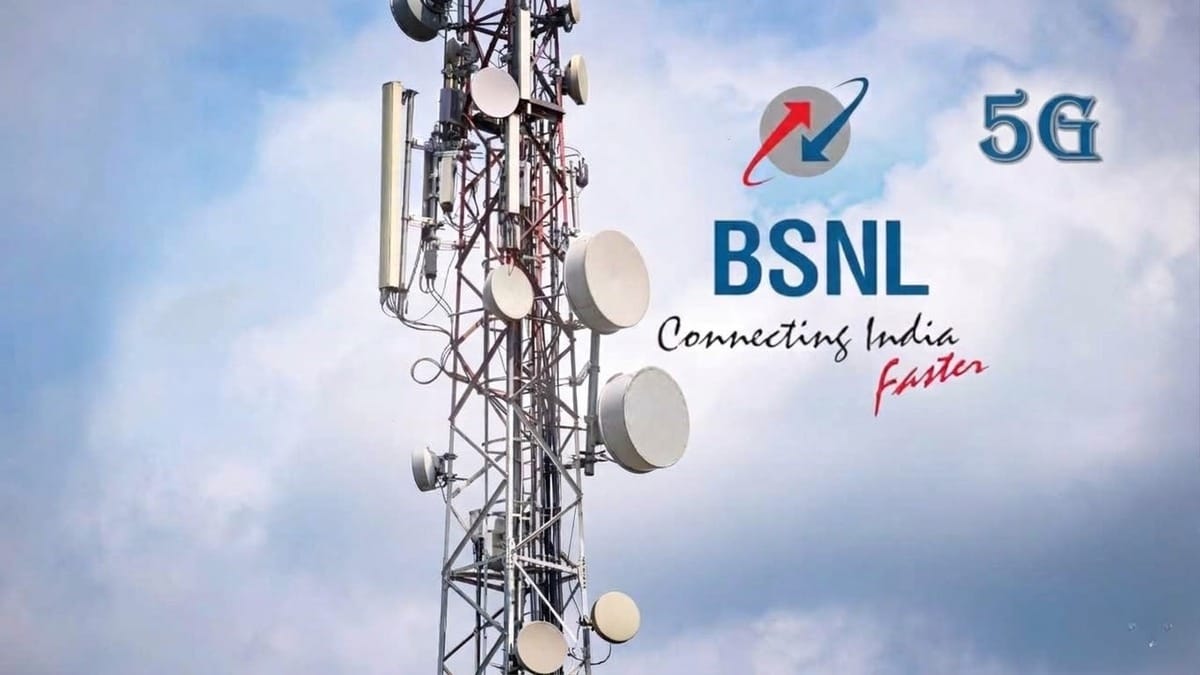
The wait for India’s home-grown high-speed network is finally nearing its end as BSNL 5G transitions from ambitious blueprints to real-world deployment in early 2026. The Indian telecom landscape is witnessing a historic shift as BSNL comeback in March 2026.
After years of anticipation and massive government support and aggressive network upgrades, BSNL has achieved consecutive profitable quarters, surged in revenue, and rolled out nearly 98,000 4G sites nationwide using a fully indigenous technology stack.
With plans starting as low as ₹1 and ambitions for 5G upgrades, the state-run telco is challenging private giants like Jio and Airtel while prioritizing rural connectivity.
This BSNL revival 2026 is driven by hard data. In the first nine months of FY26 (ending December 2025), BSNL reported a 105% jump in core operating profit (EBITDA) to ₹4,858 crore, alongside a 13% revenue increase to ₹17,705 crore.
The company is on track for a full-year revenue target of ₹27,500 crore, marking significant growth from previous years. A key boost came from the Union Budget’s ₹28,473 crore equity infusion, supporting debt reduction and infrastructure.
India has officially joined the elite club of five nations—including China and Sweden—that possess an end-to-end indigenous telecom stack. Developed by a consortium of TCS, Tejas Networks, and C-DOT.
BSNL’s new 4G network is not just about catching up; it’s built on a 5G-ready, cloud-native architecture. The hardware being installed is software-upgradable, meaning the jump to 5G in major metros like Delhi and Mumbai will not require massive hardware replacements.
As of early 2026, the rollout has successfully connected over 26,700 previously unserved villages, bringing high-speed data to over 22 million citizens in remote regions. BSNL now serves over 98 million subscribers with an 8.22% market share, showing steady gains especially in rural areas.
The cornerstone of BSNL comeback 2026 is its 4G rollout. With nearly 97,000 sites already operational, the company plans to add 23,000 more by mid-2026, targeting uncovered villages and urban gaps.
This indigenous Make-in-India network has boosted 4G users from 5 lakh to 17 lakh, with daily data usage soaring from 184 TB to 410 TB.
Despite the massive expansion, March 2026 has seen a spike in user complaints regarding call drops and one way audio, particularly in strongholds like Kerala. Technical reports indicate that approximately 1.32 lakh 4G cells are currently transmitting at lower power levels (35 dBm) instead of the required 46 dBm.
This “testing phase” allows the indigenous stack to stabilize under real-world traffic. To mitigate this, BSNL recently launched nationwide Voice over Wi-Fi (VoWi-Fi), allowing users to make seamless calls via their home broadband when cellular signals are weak.
Also Read Vi Comeback or Collapse? How the ₹87,000 Crore AGR Freeze Changes Vodafone Idea’s Fate
New BSNL 5G SIMs: Price and Availability
BSNL has begun the rollout of 5G ready USIMs across major circles. While the network is currently optimized for 4G, these SIMs are essential for users to latch onto the upcoming 5G FWA (Fixed Wireless Access) services.
– Upgrade Cost: SIM upgrades are typically priced around ₹10–₹20 at BSNL Customer Service Centers (CSCs).
– 5G FWA (Q-5G): BSNL’s “Quantum 5G” is already in pilot phases in cities like Bengaluru, Pune, and Chandigarh, offering fiber-like speeds of up to 1 Gbps without the need for physical cabling.
While private operators have introduced further tariff hikes in early 2026, BSNL remains the “recharge king” for budget-conscious users.
– The Power Pack: The ₹239 plan Offers unlimited calling and 2GB daily data, a plan that remains nearly 20% cheaper than comparable offerings from Jio or Airtel.
– Annual Super Saver: The ₹2799 plan provides 3GB of data per day for 365 days, making it the most affordable high-data annual plan in the market.