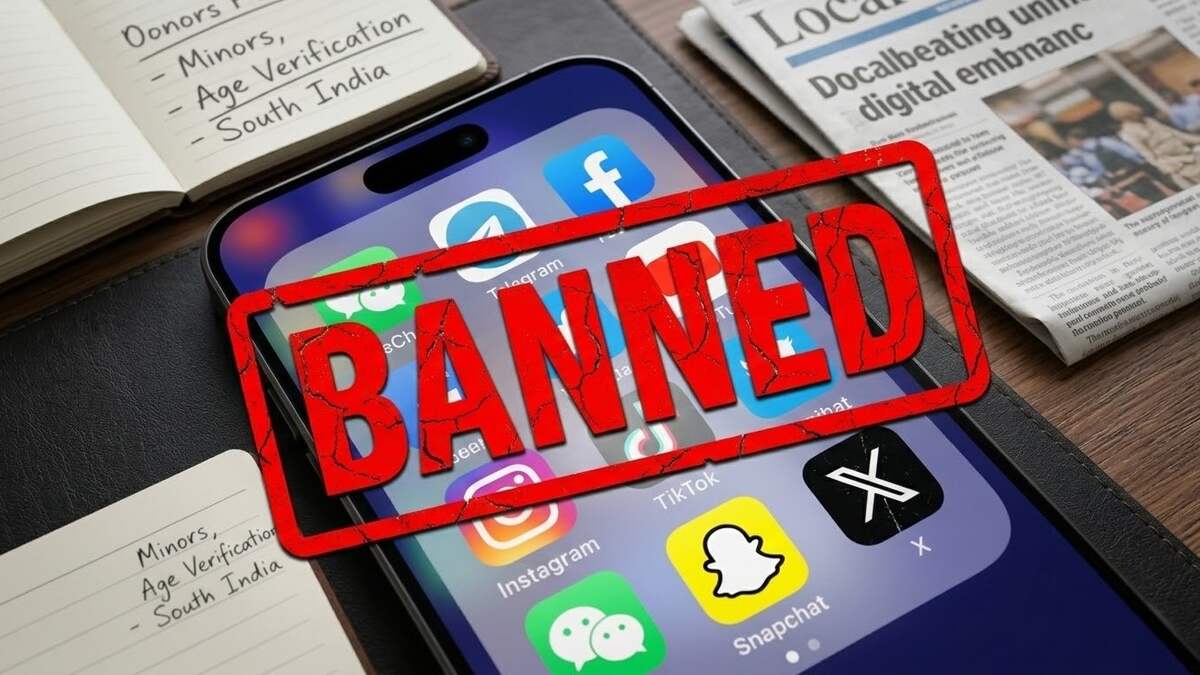
Karnataka and Andhra Pradesh have become the first Indian states to announce restrictions on social media use for children and minors. Announced just days ago on March 6, 2026.
These policies aim to combat rising concerns over digital addiction, mental health issues, cyberbullying, sleep disruption, and declining academic performance among young users.
Karnataka, home to India’s tech capital Bengaluru, has declared a ban on social media for children under 16, while Andhra Pradesh plans to prohibit access for those below 13 (with discussions ongoing for ages 13–16) within the next 90 days.
These developments follow recommendations in the Economic Survey 2025-26 for age-based limits on social media to address “predatory” platform designs and compulsive usage.
India has nearly 1 billion internet users, with over 85% of households owning smartphones. The Economic Survey 2025-26 highlighted that near-universal access among 15–29-year-olds has shifted focus from connectivity to behavioral health risks like digital addiction.
Chief economic adviser V. Anantha Nageswaran urged policies for age verification, screen-time limits, and protections against harmful content.
These state-level actions align with global trends, including Australia’s under-16 ban and similar proposals in France and Indonesia.
In India, preliminary discussions at the IT Ministry suggest momentum for national guidelines, though internet regulation remains a central subject—potentially creating jurisdictional challenges for state bans.
The Karnataka Proposal: No Social Media for Under-16s
Karnataka Chief Minister Siddaramaiah announced the ban during the presentation of the ₹4.48 lakh crore state budget for 2026–27. He stated:
“With the objective of preventing adverse effects of increasing mobile usage on children, usage of social media will be banned for children under the age of 16.”
The policy targets platforms like Instagram, Snapchat, Facebook, X (formerly Twitter), and YouTube to curb negative impacts in schools and homes. While general mobile access remains allowed for education and other purposes, the focus is on restricting addictive social features.
If implemented, Karnataka would be the first Indian state with such a restriction. However, details on enforcement—such as age verification, platform responsibilities, penalties, or exact rollout timeline—are yet to emerge.
Tech giant Meta (owner of Facebook and Instagram) responded cautiously, pledging compliance but warning that blanket bans could push teens toward unregulated or less safe sites, logged-out browsing, or VPN bypasses.
Andhra Pradesh’s Plan: Restrictions for Under-13s Within 90 Days
Neighboring Andhra Pradesh followed suit quickly. Chief Minister N. Chandrababu Naidu announced in the state assembly that social media would be prohibited for children below 13, with implementation targeted within 90 days (by early June 2026). He stated:
“Our children’s cognitive development is being hijacked by infinite scrolls. We are setting a 90-day deadline to ensure no child under 13 in Andhra Pradesh can bypass age gates.”
The proposal, suggested by IT and Education Minister Nara Lokesh, addresses excessive exposure affecting well-being and development. Naidu noted ongoing debates about extending restrictions to ages 13–16, with a final decision after wider consultations.
Karnataka and Andhra Pradesh’s move emphasizes child protection from online risks, but enforcement mechanisms (e.g., ID checks or parental controls) remain under discussion.
Challenges: Enforcement, Jurisdiction, and Effectiveness
– Technical feasibility — Platforms need robust age-gating (e.g., Aadhaar-linked verification), but children could bypass via fake accounts or VPNs.
– Legal questions — Internet regulation falls under the central government; states may need coordination with national IT Rules.
– Unintended consequences — As Meta noted, restrictions might drive users to unregulated apps lacking safeguards.
Child psychologists support the intent, citing evidence from countries like China showing benefits from limits on compulsive use.
Also Read BSNL Comeback 2026: Record Profits, 23,000 New 4G Sites, and Ultra-Affordable Plans Revival
These pioneering moves signal growing national momentum for social media age restrictions. Parents in Telangana and beyond may see ripple effects, with more states (like Goa) exploring similar policies.
As India balances digital growth with child safety, these bans could inspire federal action. For now, families are advised to promote offline activities, device-free hours, and open discussions about online habits.