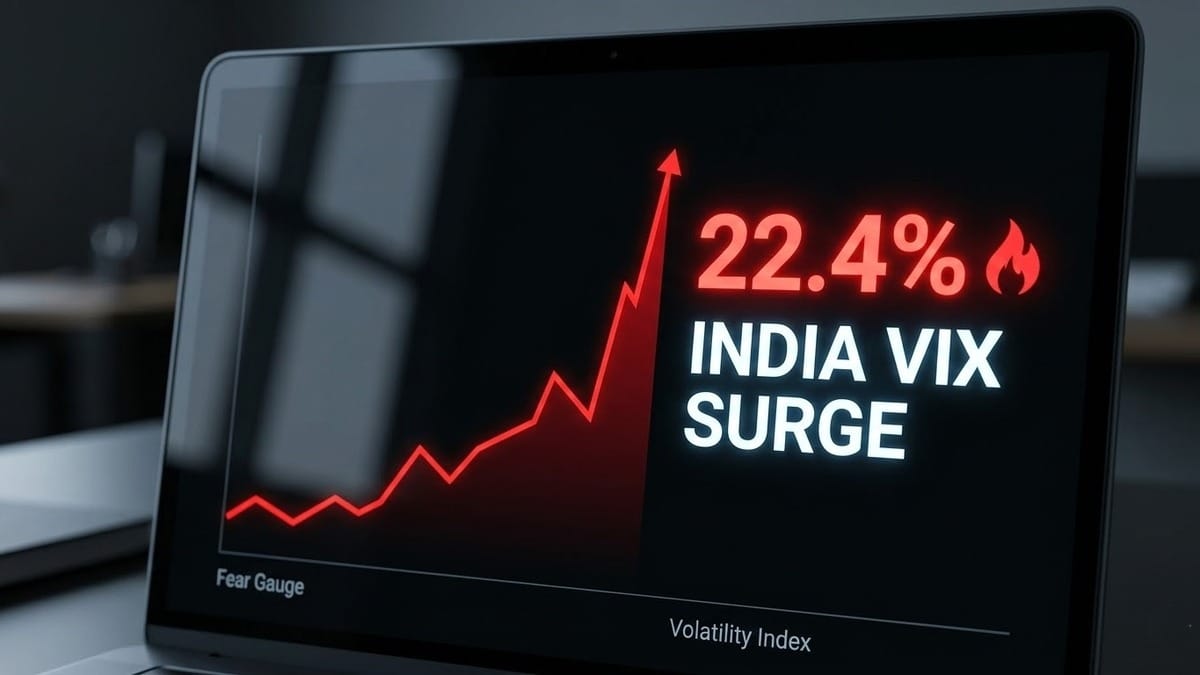
The Indian stock market has just endured its most brutal stretch of 2026. In a relentless five-day sell-off, the Nifty 50 and BSE Sensex recorded their worst weekly performance in over 14 months. By the closing bell on Friday, investors were left reeling as nearly ₹19 lakh crore in market capitalization was wiped out.
Nifty 50 index recording its worst weekly performance in over a year. Closing at 24,450.45 on Friday after a 1.27% drop, the benchmark index shed approximately 2.9% over the week, marking its steepest decline since February 2025.
The BSE Sensex mirrored this trend, falling 1.37% on Friday to settle at 78,918.90, resulting in a weekly loss of nearly 3% – its sharpest drop since December 2024.
Investors grappled with a risk-off mood as the escalating U.S.-Israeli war with Iran drove crude oil prices to multi-month highs, exacerbating concerns for India, the world’s third-largest oil importer.
Reasons Behind Market Crash
The primary driver of the Nifty 50 decline in March 2026 was the intensifying US-Israel-Iran conflict, which disrupted key oil supply routes like the Strait of Hormuz.
Brent crude surged to $87.66 per barrel, marking a 20% weekly jump – the largest since March 2022. Prices even hit $92.69 amid supply fears, stoking inflation concerns and widening India’s trade deficit.
Additional factors included:
1. Foreign Institutional Investor (FII) Outflows: FIIs sold Indian equities worth Rs 21,436 crore this month, including Rs 3,752 crore in the previous session alone.
2. Rising Bond Yields: Indian government bond yields climbed to 6.65% on the 10-year benchmark, making fixed-income investments more attractive compared to stocks.
3. Global Market Weakness: Asian and European indices also suffered, with South Korea’s Kospi down nearly 2%, Germany’s DAX falling about 2%, and the UK’s FTSE 100 declining 1.5%.
4. The Rupee’s Record Low: The domestic currency hitting an all-time low of 92.35 against the USD has triggered massive FII outflows.
Also Read India’s Tech Industry Set to Cross $300 Billion in 2026: Here’s What It Means for Jobs and Startups
Sector-wise Impacts
Fifteen of sixteen major sectors logged losses, with financials and banks down 4.5%, oil and gas slipping 3.9%, and state-owned banks plunging 6.5% over worries about higher borrowing costs. Realty and private banks also fell over 1% on Friday.
Key laggards included Larsen & Toubro (down 7.7%, its worst week since May 2020 due to Middle East exposure) and InterGlobe Aviation (IndiGo, tumbling 8.8% on fuel cost hikes). ICICI Bank, HDFC Bank, and Bajaj Finserv dropped 2-3%, while oil marketing firms like BPCL, HPCL, and IOC suffered.
Conversely, Bharat Electronics gained amid defence optimism, and Reliance Industries rose slightly. The Nifty IT index edged up 0.35% on Friday.
Broader markets fared similarly: Small-caps down 2.5%, mid-caps 2.9%, and the rupee hit its worst weekly fall in over a month.
Expert Insights
Analysts view the Nifty worst week in a year as a short-term setback. Oil prices may not stay elevated, limiting macro impacts. The conflict could end soon, offering buying opportunities at current valuations.
As markets reopen, focus shifts to Middle East de-escalation and economic data. The Nifty slide below key supports signals volatility, but resilient sectors like defence and IT may attract value hunters.
This event highlights global interconnectedness, urging investors to diversify amid ongoing Nifty 50 decline in March 2026 risks.